The AI reality check

Two groups see AI very differently, and a staff engineer has to translate between them.
Non-engineers see a senior developer who never sleeps. Engineers see the limits: plausible code that needs review, no understanding of your architecture without guidance, and outdated defaults, like building an agent on an old model because that's what the training data showed. The gap between "it runs" and "it ships to production" is where expertise matters.
The productivity paradox:
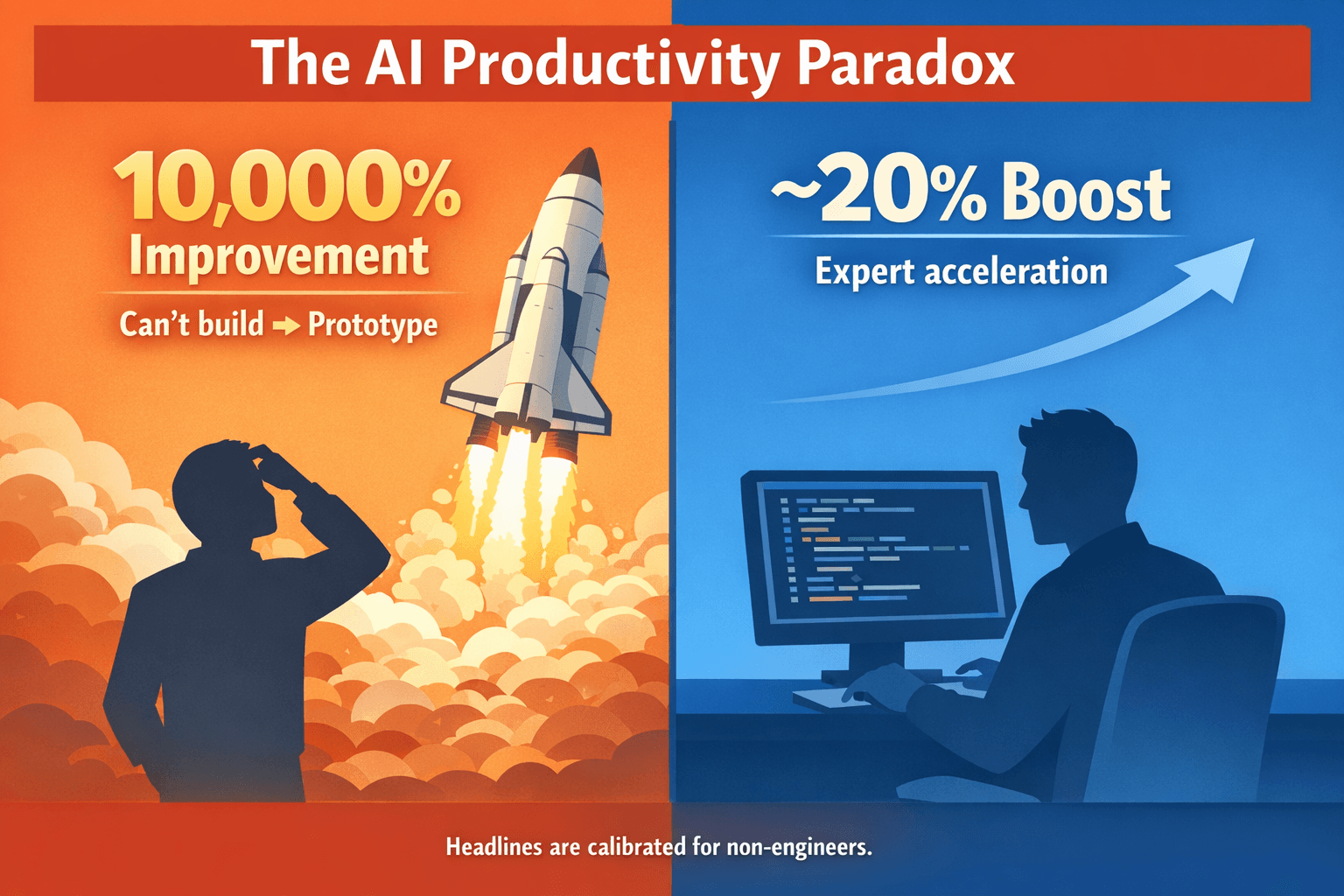
Someone who couldn't build anything now builds a prototype: a 10,000% gain. An experienced engineer on a mature codebase sees something closer to 20%. Headlines describe the first group. The people who plan roadmaps read the headlines.
Your job here:
- Set expectations upward. Translate the real gain into roadmap terms before leadership plans around 10x
- Measure, don't argue. Throughput and defect rates per team end the hype debate in both directions
- Draw the line on sensitive domains. Fintech, healthcare, auth, and payments need named expert reviewers. Write that rule down before an incident forces you to
- Teach skepticism as a skill. Show juniors concrete failures (invented APIs, stale models, confident wrong comments) so they learn what to check
AI can do the work: code, validation, docs, specs, presentations. It also hallucinates. Human oversight isn't a formality. It is the part of the system that knows what matters.