Generative coding workflow
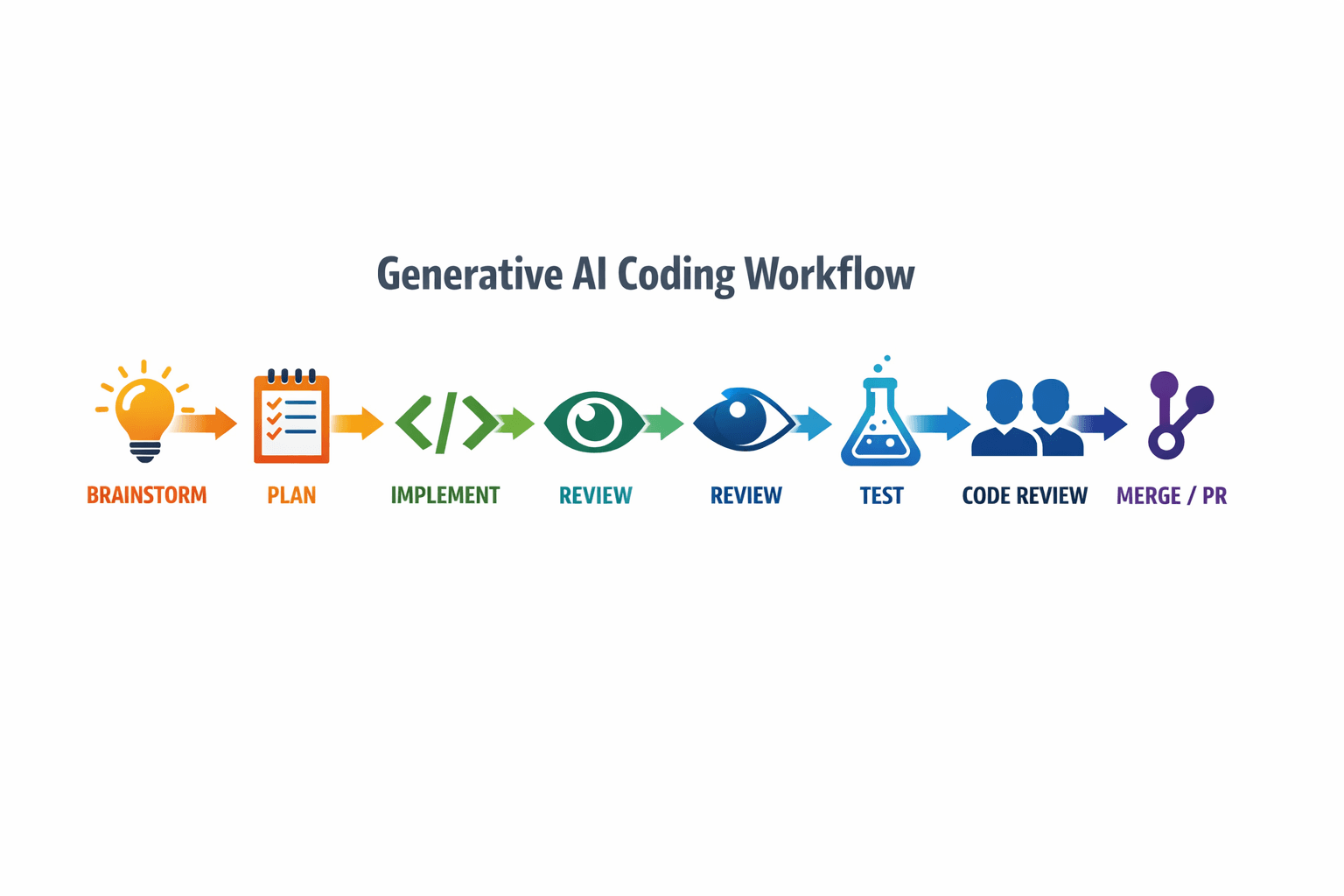
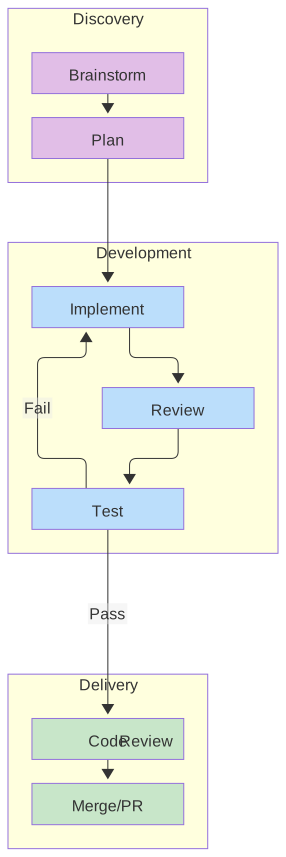
Implementation got cheap. Discovery didn't. The most expensive failure mode in agent-driven teams is building the wrong thing quickly, so the workflow front-loads decisions and keeps each phase in its own context.
- Brainstorm: explore approaches with the agent. Ask for trade-offs, not code
- Plan: write the plan down. Anything crossing a team or service boundary gets a design doc or RFC that dependent teams see before agents start
- Implement: execute in focused chunks, each with a finish line
- Review: check the result against the plan, not just against the tests
- Test: RED/GREEN TDD for behavior that matters
- Code review: a fresh agent session, then the human owner
- Merge: PR with a summary and test plan
Git worktrees give each task its own checkout, so parallel agents never interfere with each other and main stays clean for reference.
# Create a worktree for a task
git worktree add ../myapp-feature-auth -b feature/auth

# List worktrees
git worktree list

# Remove when merged
git worktree remove ../myapp-feature-auth
Parallel workflow:
cd ~/projects/myapp

git worktree add ../myapp-task-1 -b feature/user-auth
git worktree add ../myapp-task-2 -b feature/payment-flow
git worktree add ../myapp-task-3 -b fix/login-bug

# One agent session per worktree
# cd ../myapp-task-1 && claude
# cd ../myapp-task-2 && claude
# cd ../myapp-task-3 && claude
Let the agent write the execution prompts. Point it at the approved plan and ask for one prompt per step. You review the prompts, which is much faster than reviewing code that went the wrong direction.
Standardize across teams: branch naming, worktree layout, and PR templates. When parallel agent work follows the same conventions, anyone can pick up anyone's branch.